Campaign Playbook 003 Virtual Production
Virtual ProductionA test shoot, not a finished campaign. Built to answer one question before anyone signed off on a full production: can a single small volume stand in for real rooms and gardens convincingly enough for catalogue product photography, and hold up next to a plate shot on location the day before.
Wayfair's first test of the workflow, structured to show range in a single day rather than deliver a finished campaign. The most useful thing it proves: the same chair-and-table setup was shot twice, once against an AI-generated garden plate and once against a plate photographed on location the previous day, so the two approaches could be judged side by side rather than in the abstract.


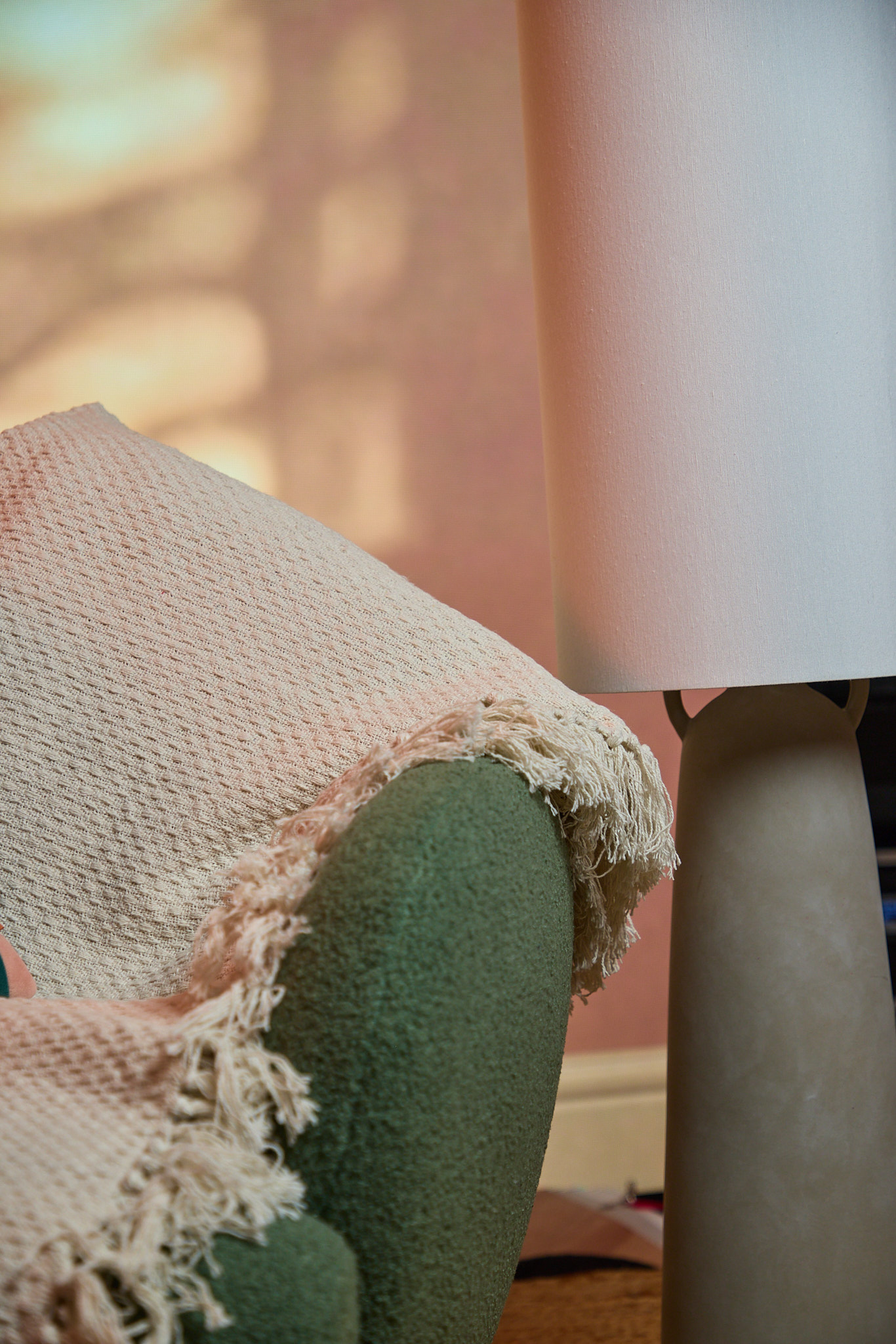
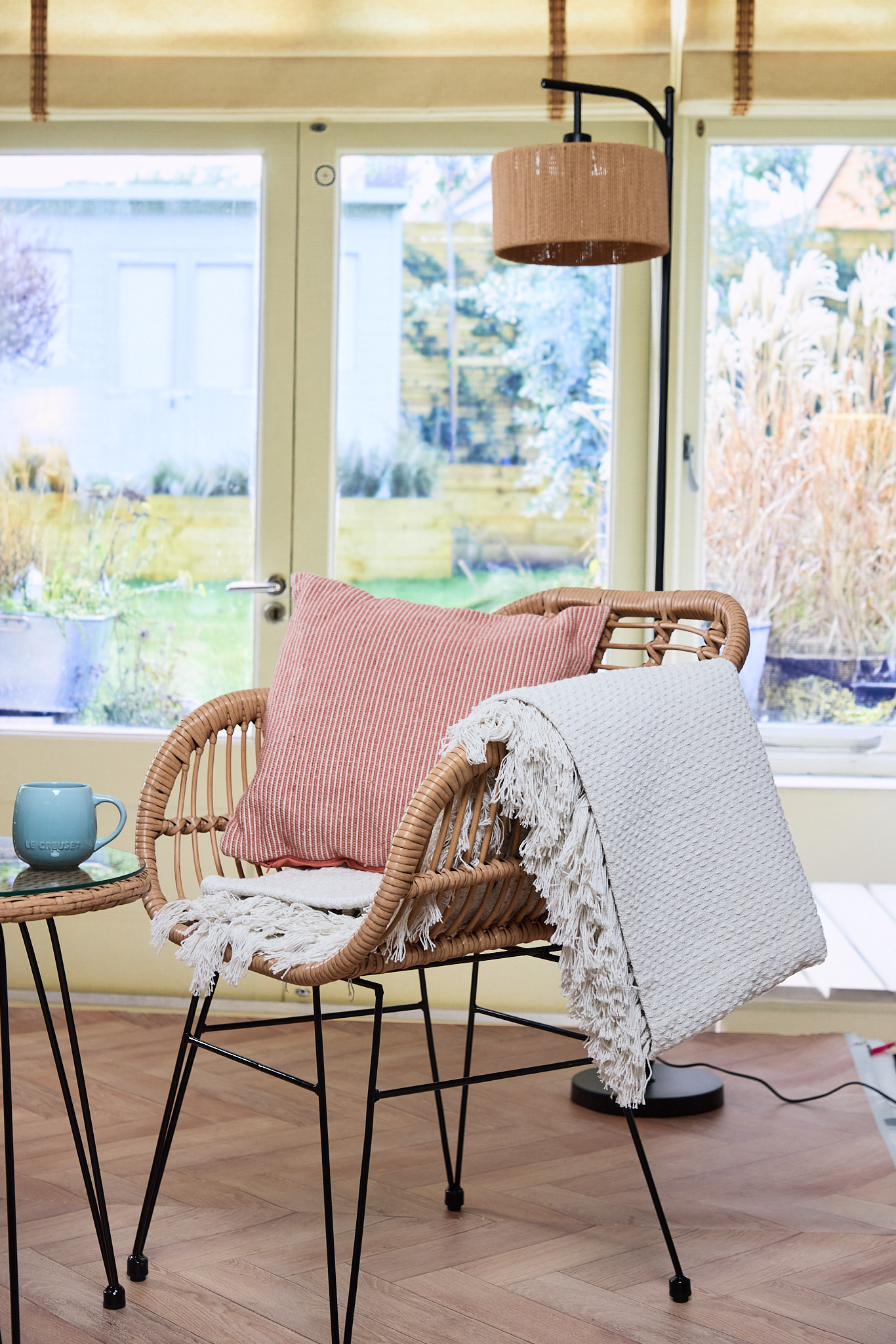
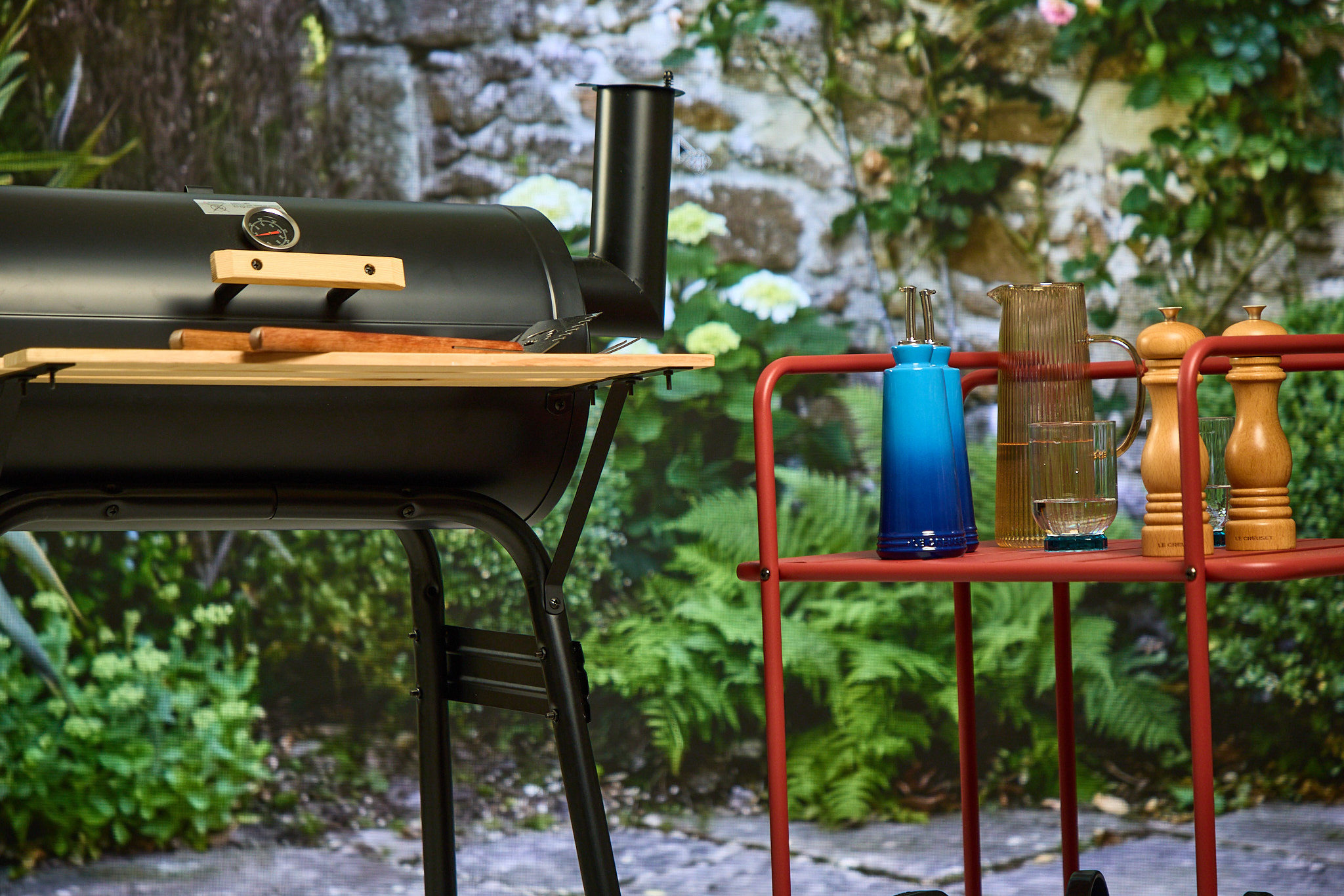
These plates are unretouched and ungraded, left raw on purpose so the technique can be judged on its own terms: light matching, plate integration, and edge treatment, rather than a finished look.
A rattan bistro chair-and-table set, styled with cushions, a throw and a ribbed glass vase, shot against a garden plate that was generated rather than photographed. It reads well at a glance: dense hedging, warm daylight, French doors. Look closer and it sits slightly off against UK expectations, the planting has more of a US-suburban character than a British garden.
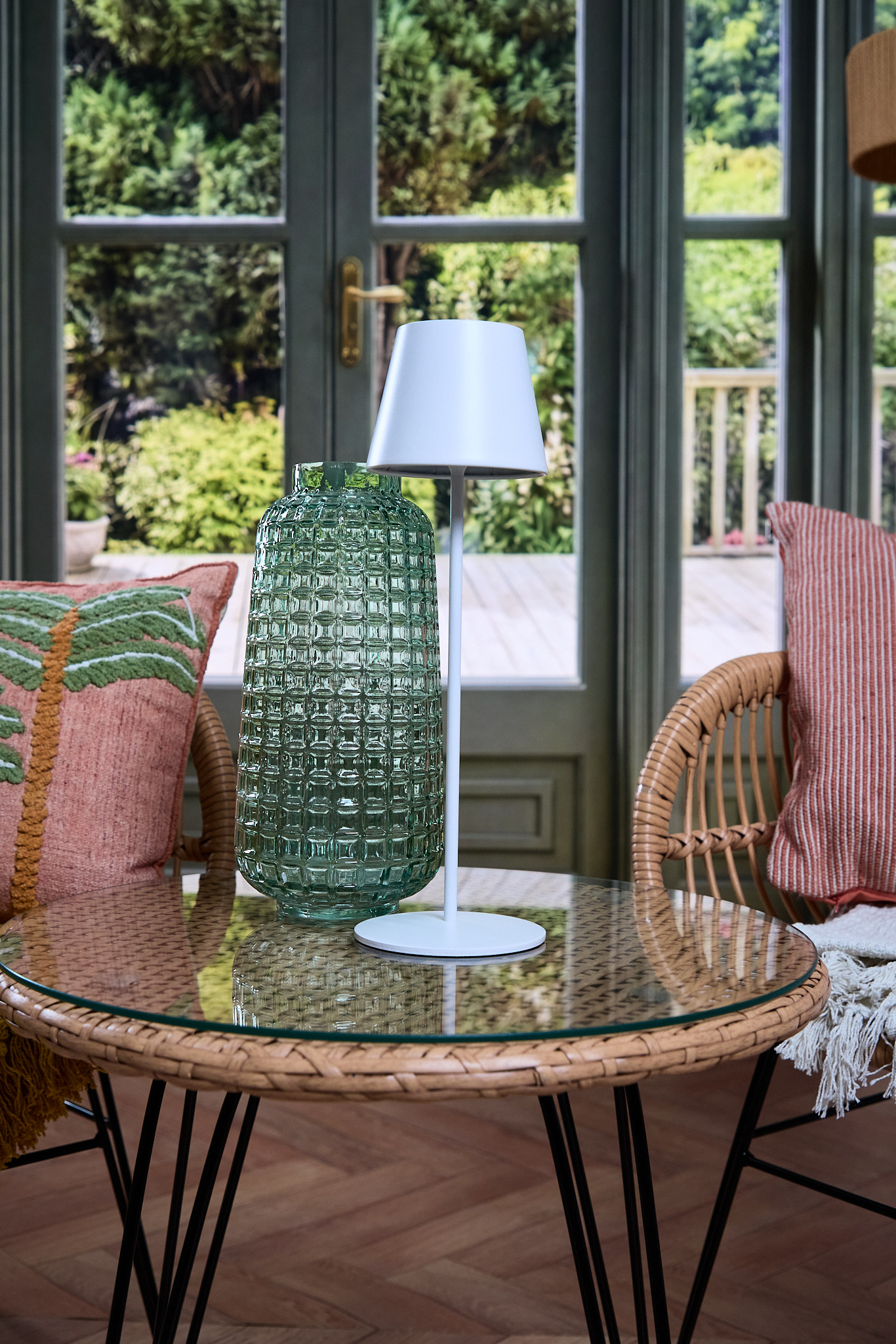
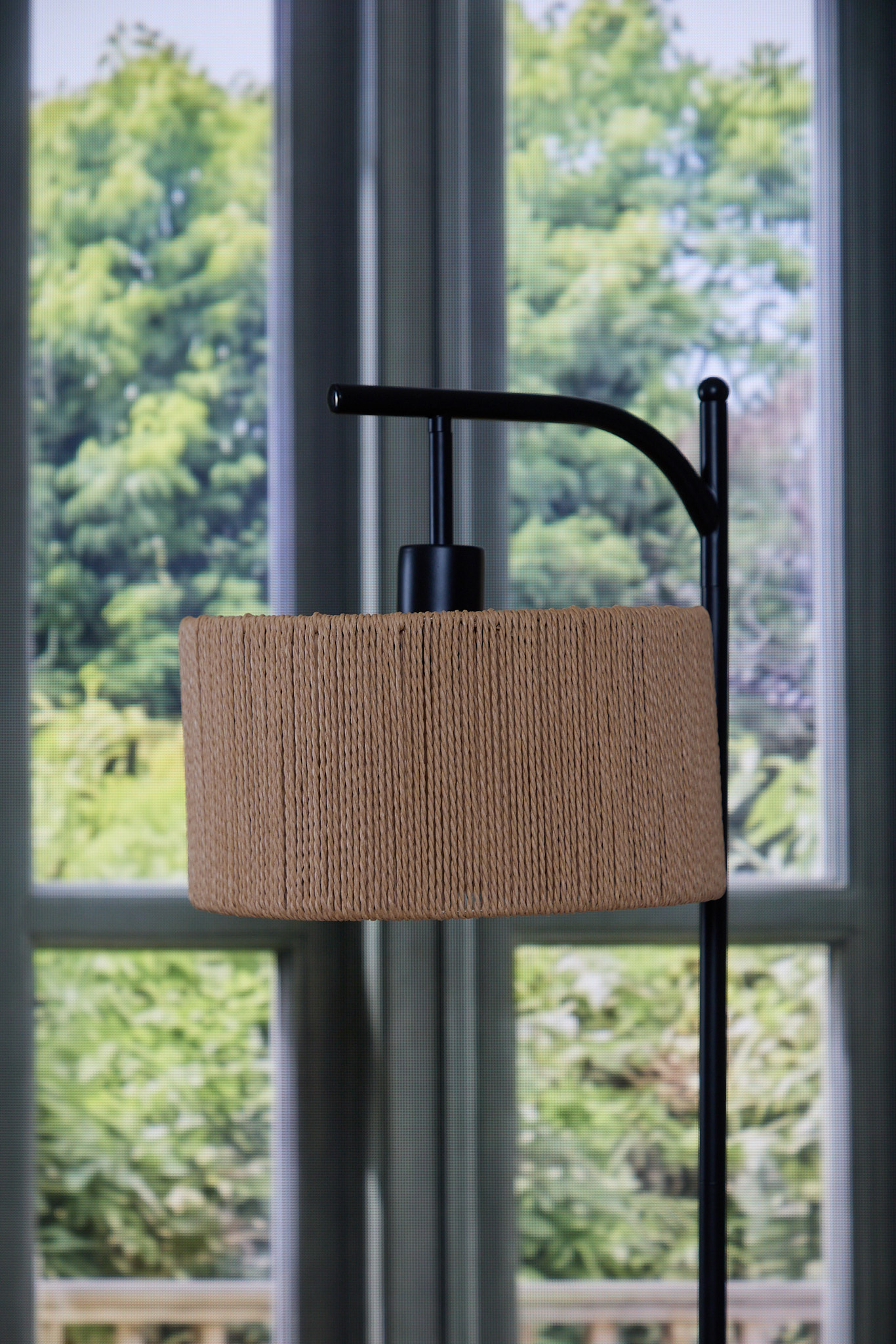
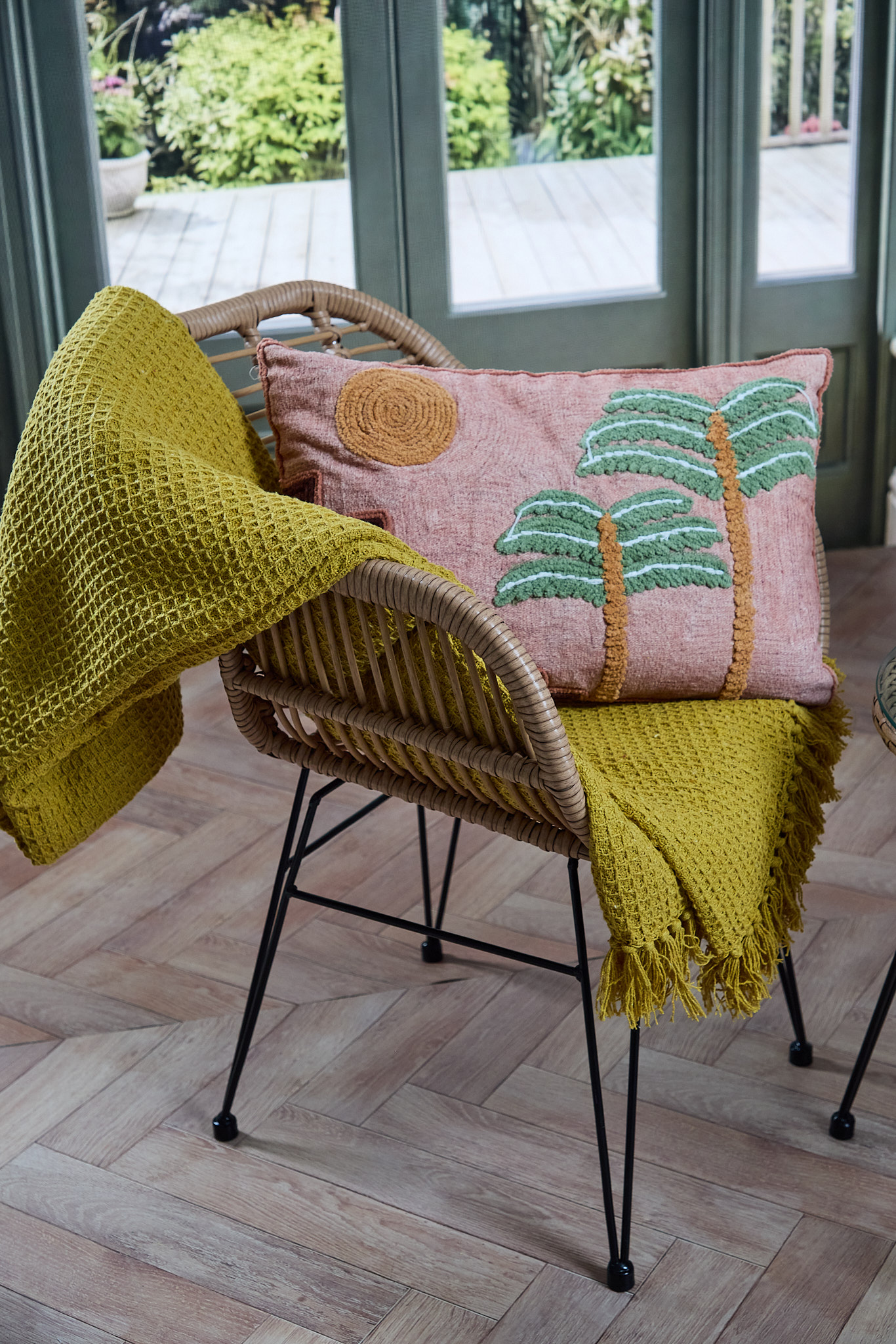
AI-generated background plates as a fast option for garden and conservatory scenes, and the kind of subtle locale mismatch worth flagging to a client before they commit to one.
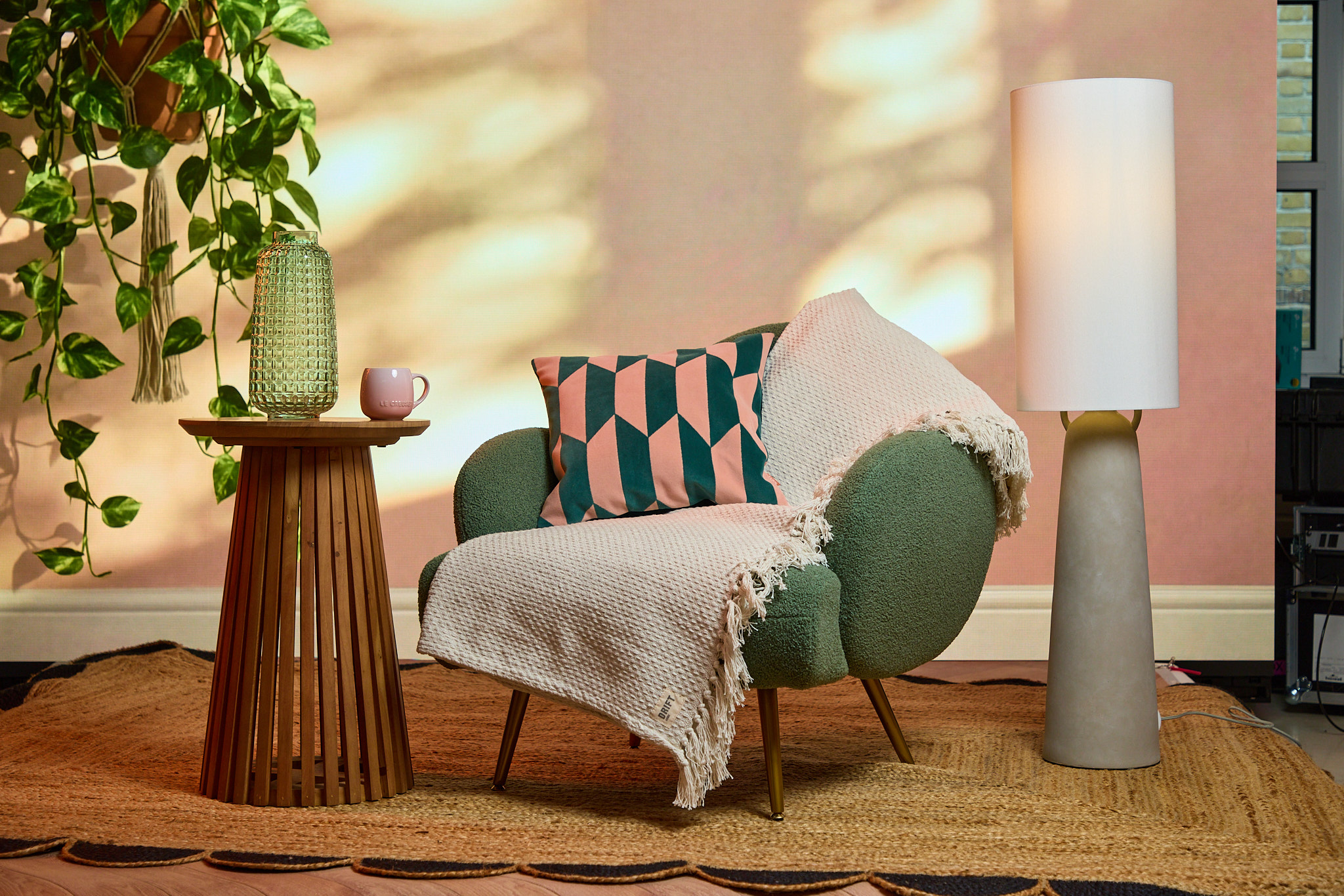
A bouclé armchair and a wood-and-cane side table, dressed with a glass vase, ceramic mug and cushion, set against a wall of dappled light. The light falling across the wall is baked into the plate and matched by the physical lighting rig rather than added afterwards, and it holds up under a tight crop.
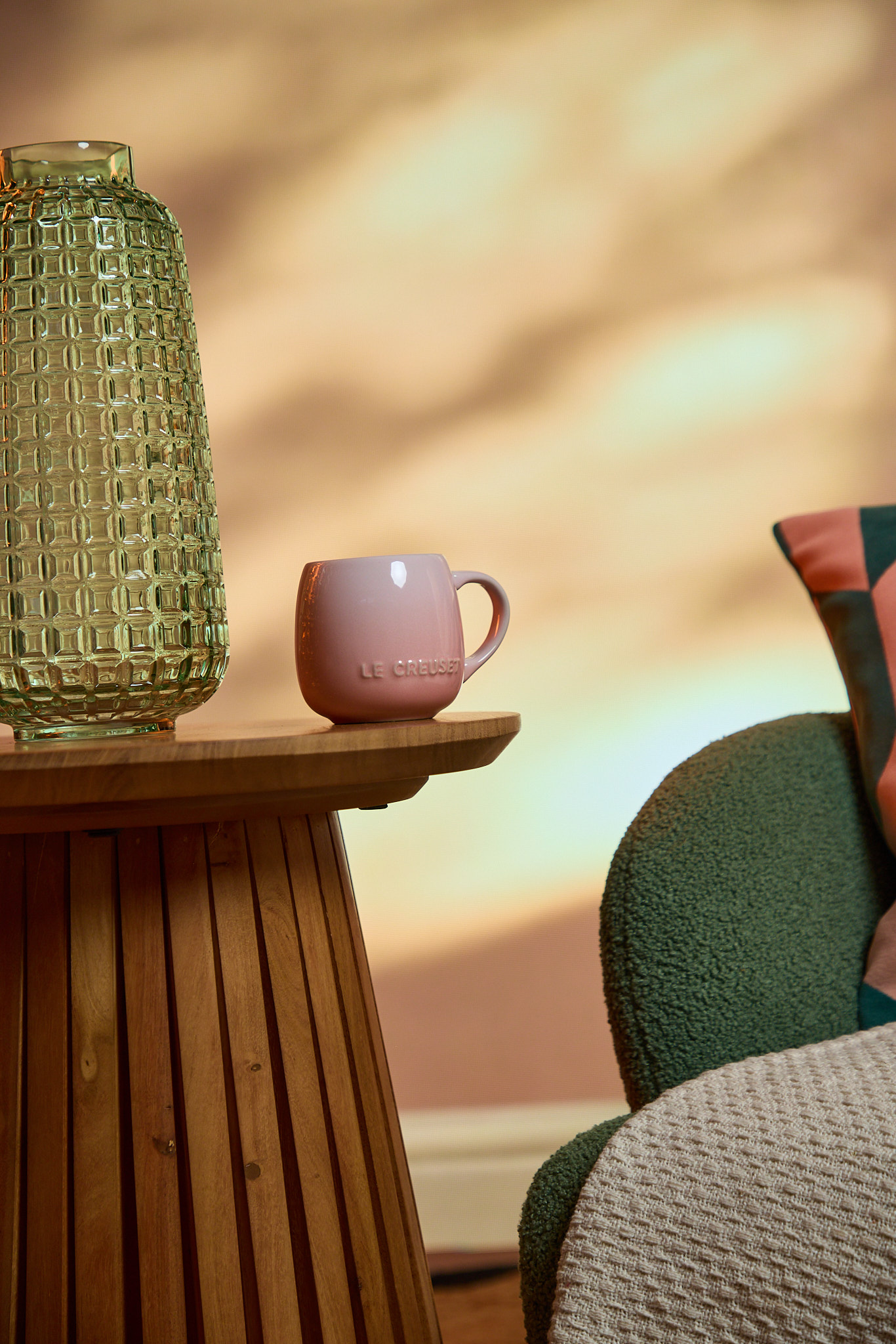
In the detail crop, the skirting board at floor level shows how a simple painted flat can be replicated by the volume itself, light included, with no set dressing beyond the board. Recommending this plate as the lead image for the case study given how directly it proves the technique.
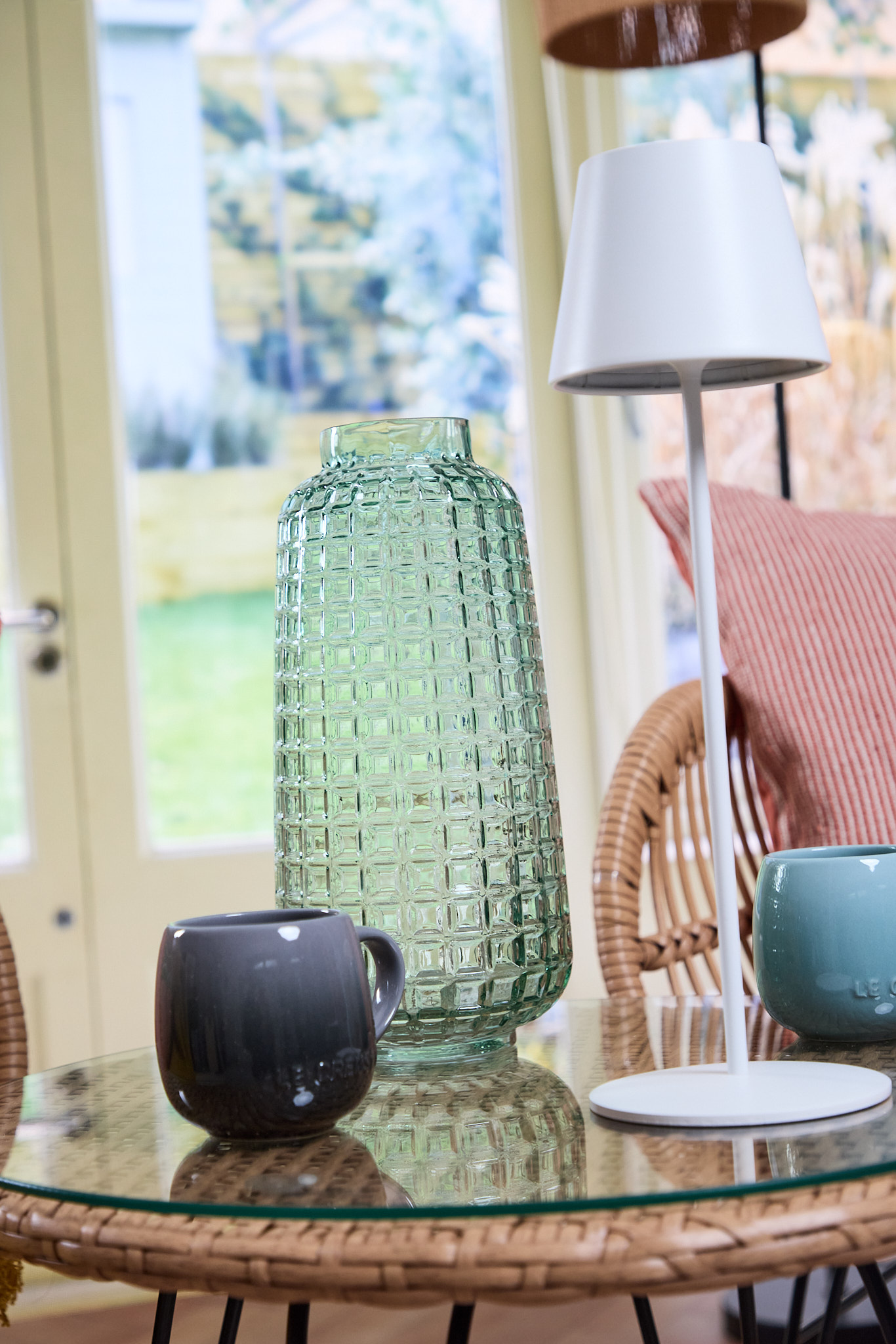
The direct comparison to Plate 01: the same rattan chair, side table, vase, mugs, cushion and throw, restaged against a plate shot on location the previous day, through a kitchen window. The difference shows immediately: a garden shed, straw-coloured grasses and an overcast UK sky, next to a doorway and fencing that read as unmistakably British.
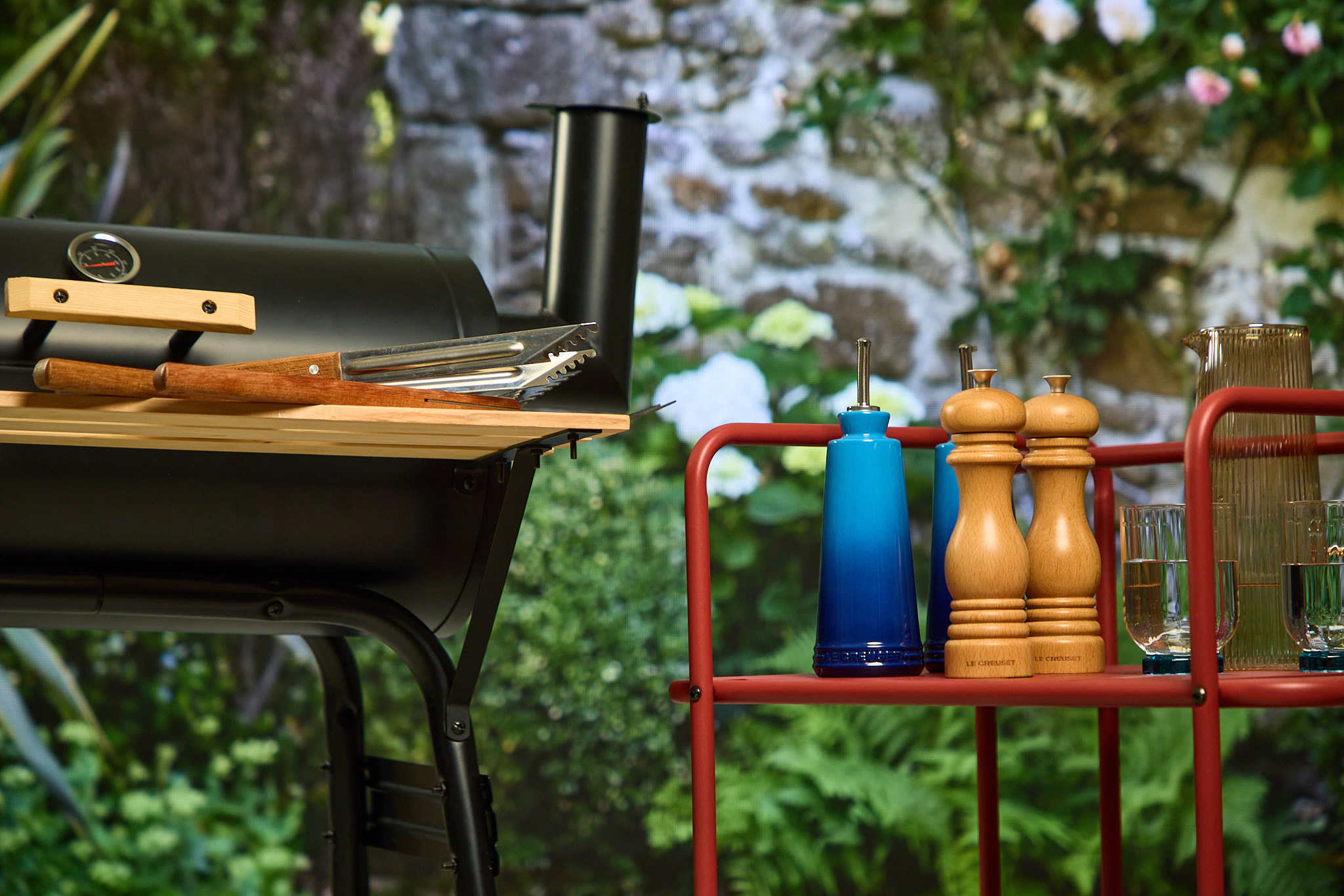
A barbecue and drinks trolley set styled with ceramic and glass bottles and a condiment set, against a moss-covered stone garden wall. The most straightforwardly "real" of the four plates, and a useful bookend to the two conservatory comparisons.

Room, volume and screen specifics for this shoot haven't been reused from other case studies, since this may not be the same rig or day.
The 5Cs stay as the core methodology across every case study, applied here to a same-day, same-set comparison between an AI-generated plate and a real one.
Four distinct scenarios, conservatory, feature wall, direct plate comparison, and exterior barbecue, all built from one room in one day.
Catalogue-style product photography without a location shoot for every scene; the comparison plate shows what's gained by supplementing with even one day of real location photography.
Full comparison pending, methodology to follow the AdGreen approach used elsewhere rather than invented figures for a test shoot.
Mixed provenance by design in this test: an AI-generated plate in Plate 01, a real location plate shot the day before in Plate 03. The comparison between the two is the point of this shoot, not a compliance gap.
A first-look test for a new client, structured to show the workflow's range and its limits honestly rather than only its best case.
This playbook sits alongside the others as the most direct side-by-side test in the set: the same furniture, shot twice, once against a generated plate and once against a plate shot on location the day before.