Campaign Playbook 005 Virtual Production
Virtual ProductionHybrid plates, real-time playback and stills-led workflow testing. Four environments tested in a single stills-first virtual production workflow: IRL plates, AI plates and hybrid compositions, played back live via Photoshop on a Mac laptop, assessed against Set Surfaces Digital's 5Cs framework.
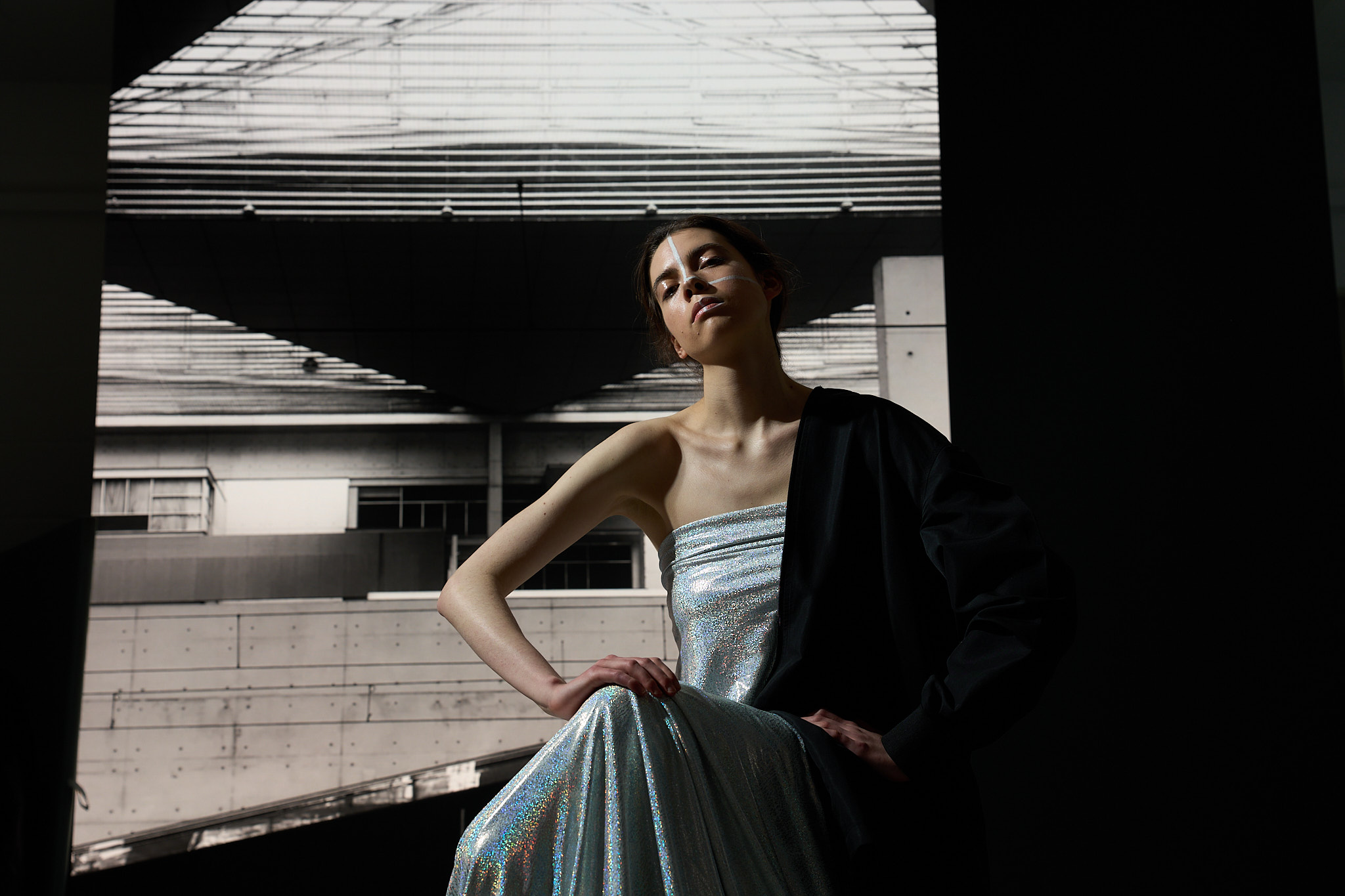
Each series pairs artist-owned archival location photography with AI: extending aspect ratio, reworking composition, adding characters or costumes, or compositing multiple archive images into an entirely new backdrop. The point of the test wasn't any single plate; it was what changes across cost, creative, culture, compliance and carbon when IRL, AI and hybrid plates sit side by side in the same workflow.
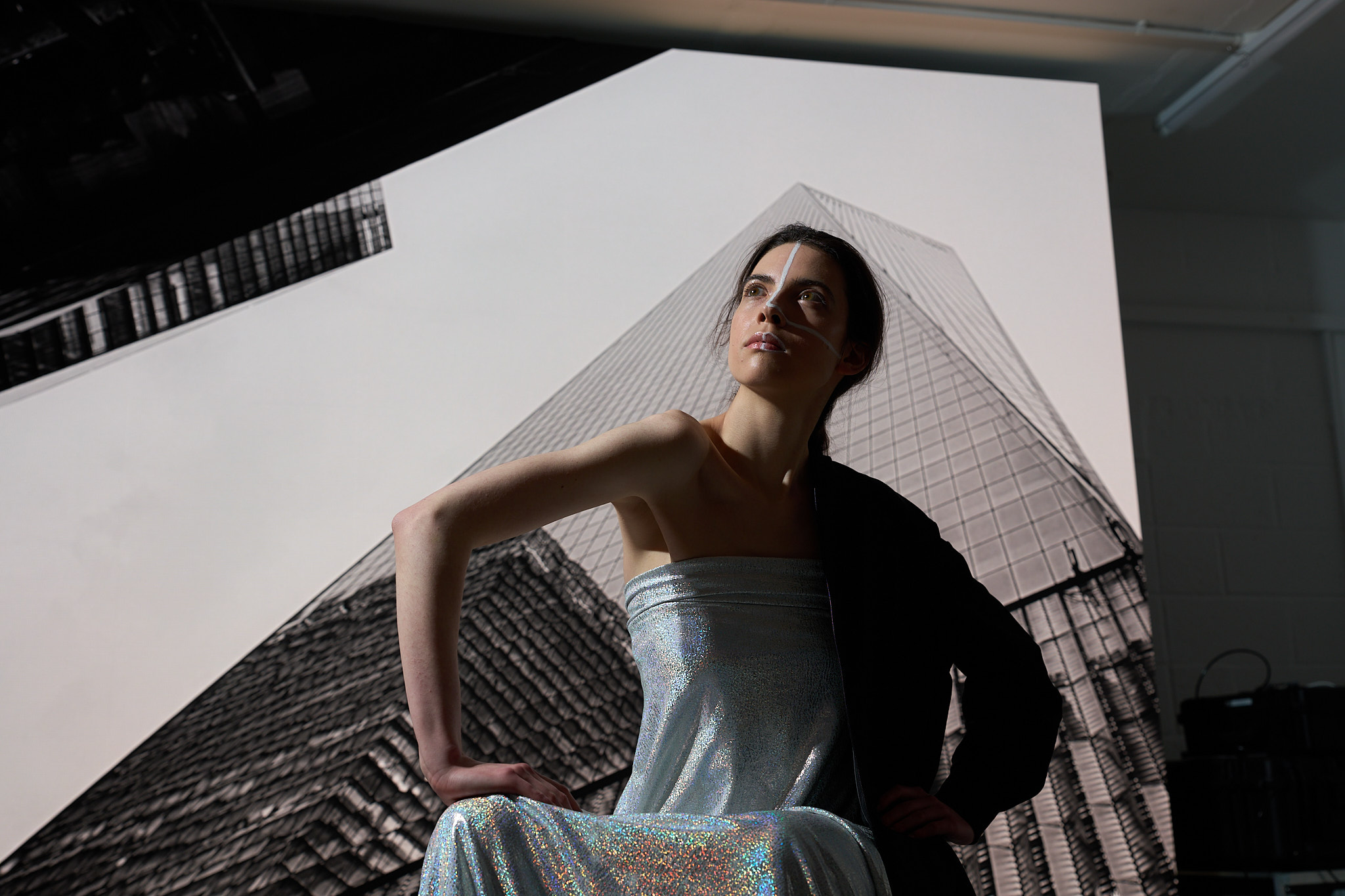

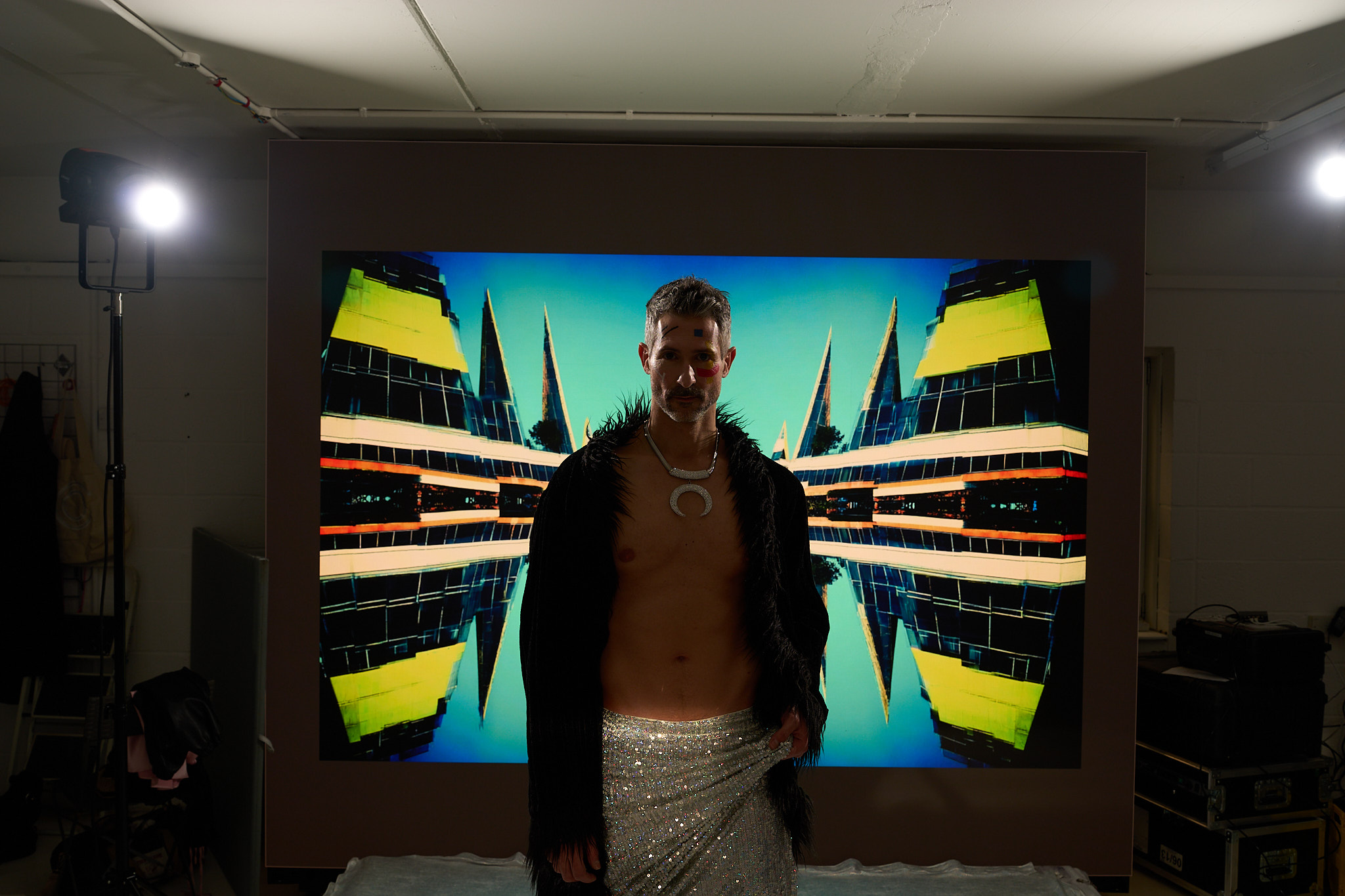

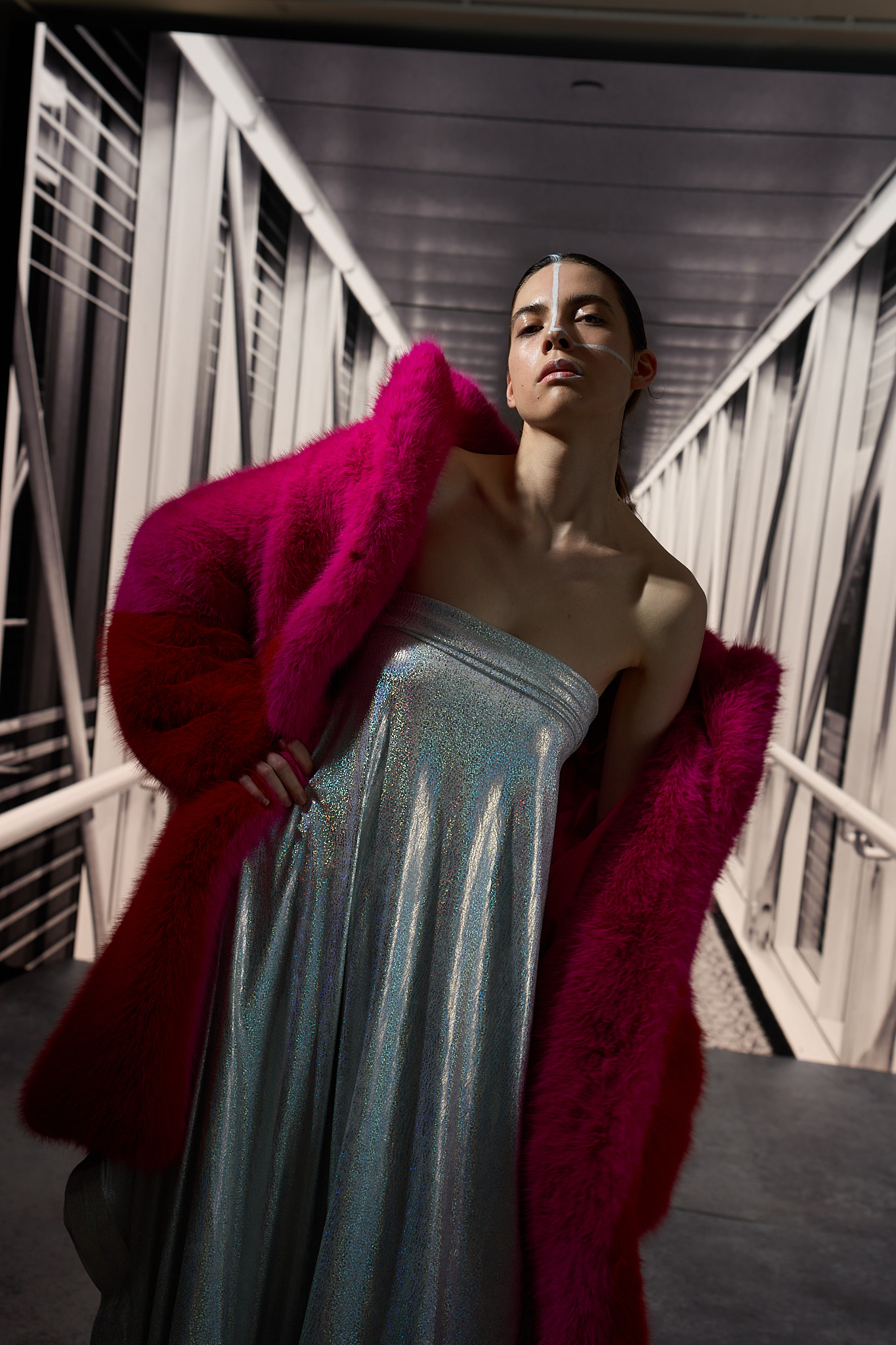
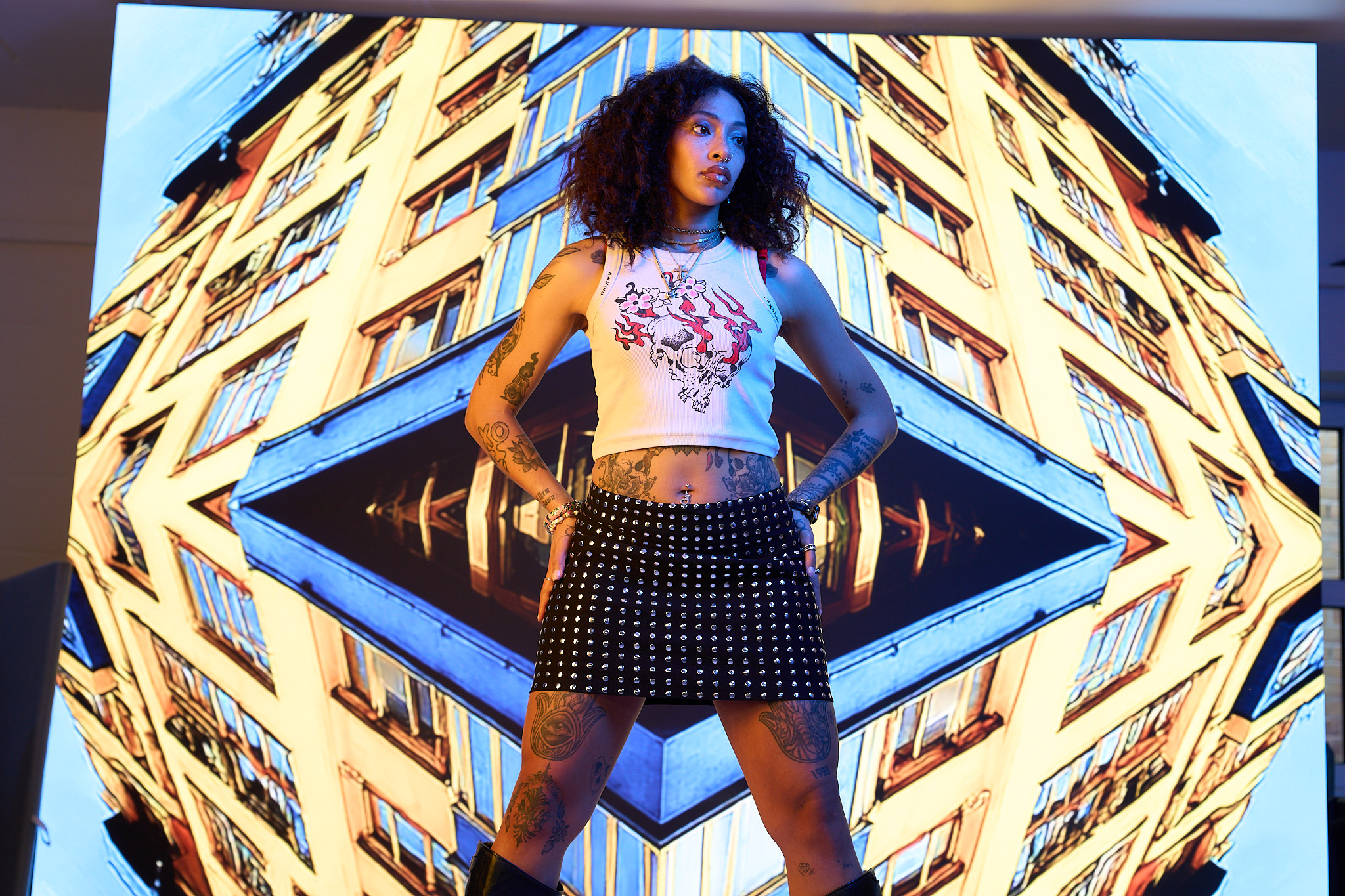
22 looks produced in one day: Constructed Grace (archival, made graphic), Signal Loss (narrative, characters added), Screenshare (AI-composited from multiple archive images), and Hotel Belvédère (costume-led). Four registers of the same underlying method.
Plate: artist-owned archival location images, New York and Madrid, shot 2020, modified to feel more graphic, with AI used to extend the ratio to 16:9 and build the fashion styling around it. The most graphically coherent set of the day: a dramatic diagrid glass-and-steel atrium and an origami-fold building facade, carrying a silver holographic gown through several angles before a costume change into a magenta fur coat.
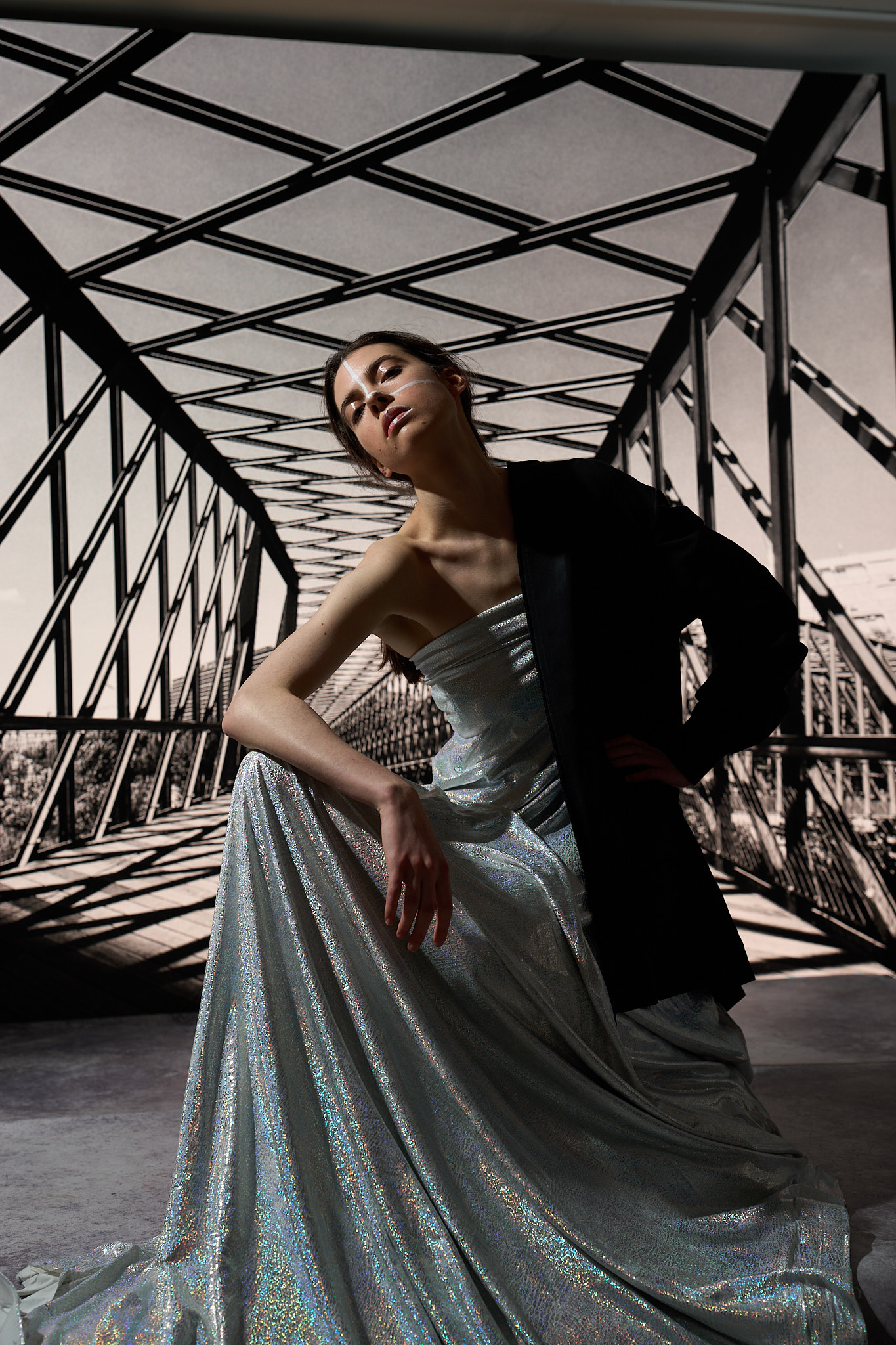
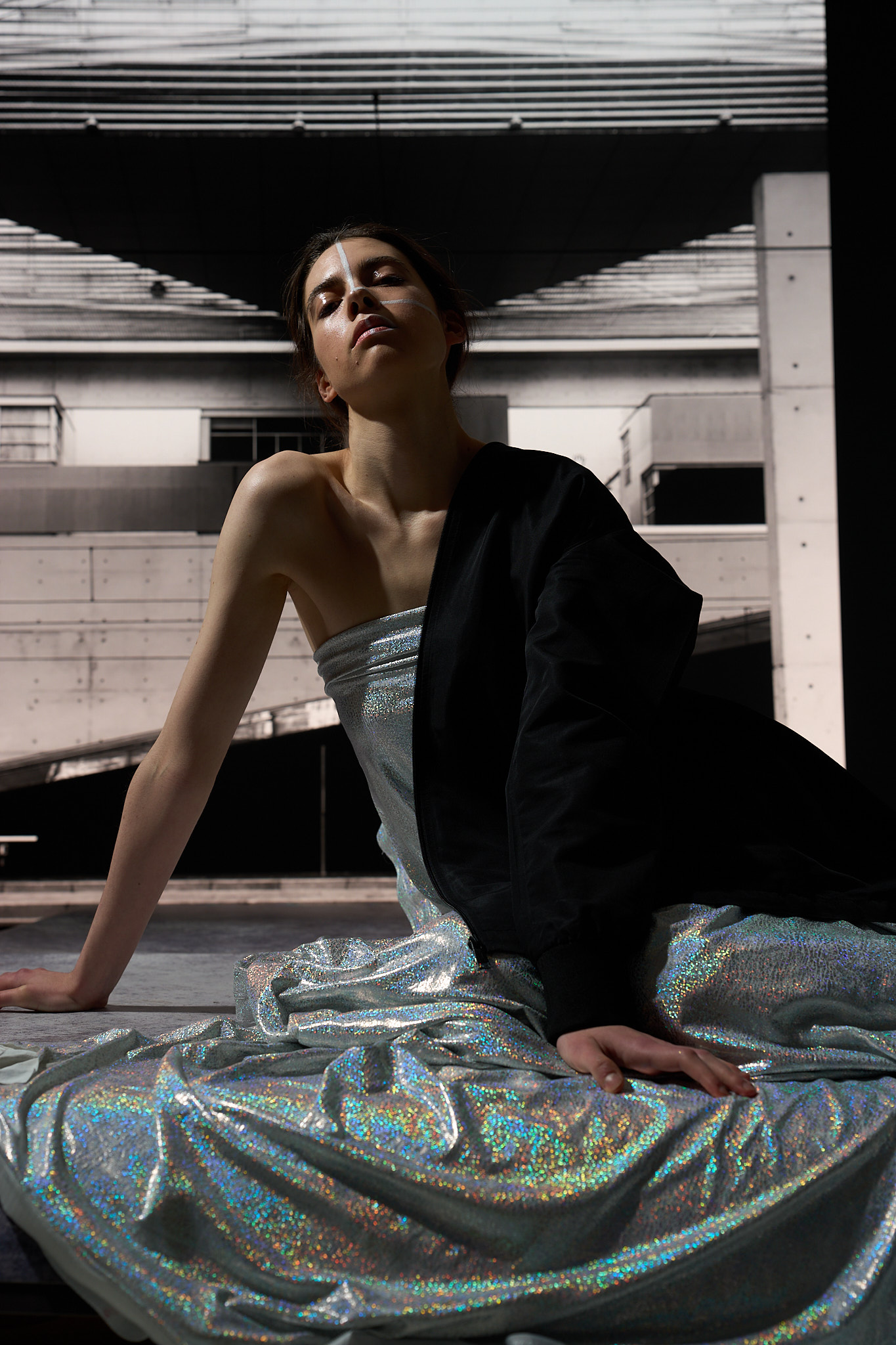
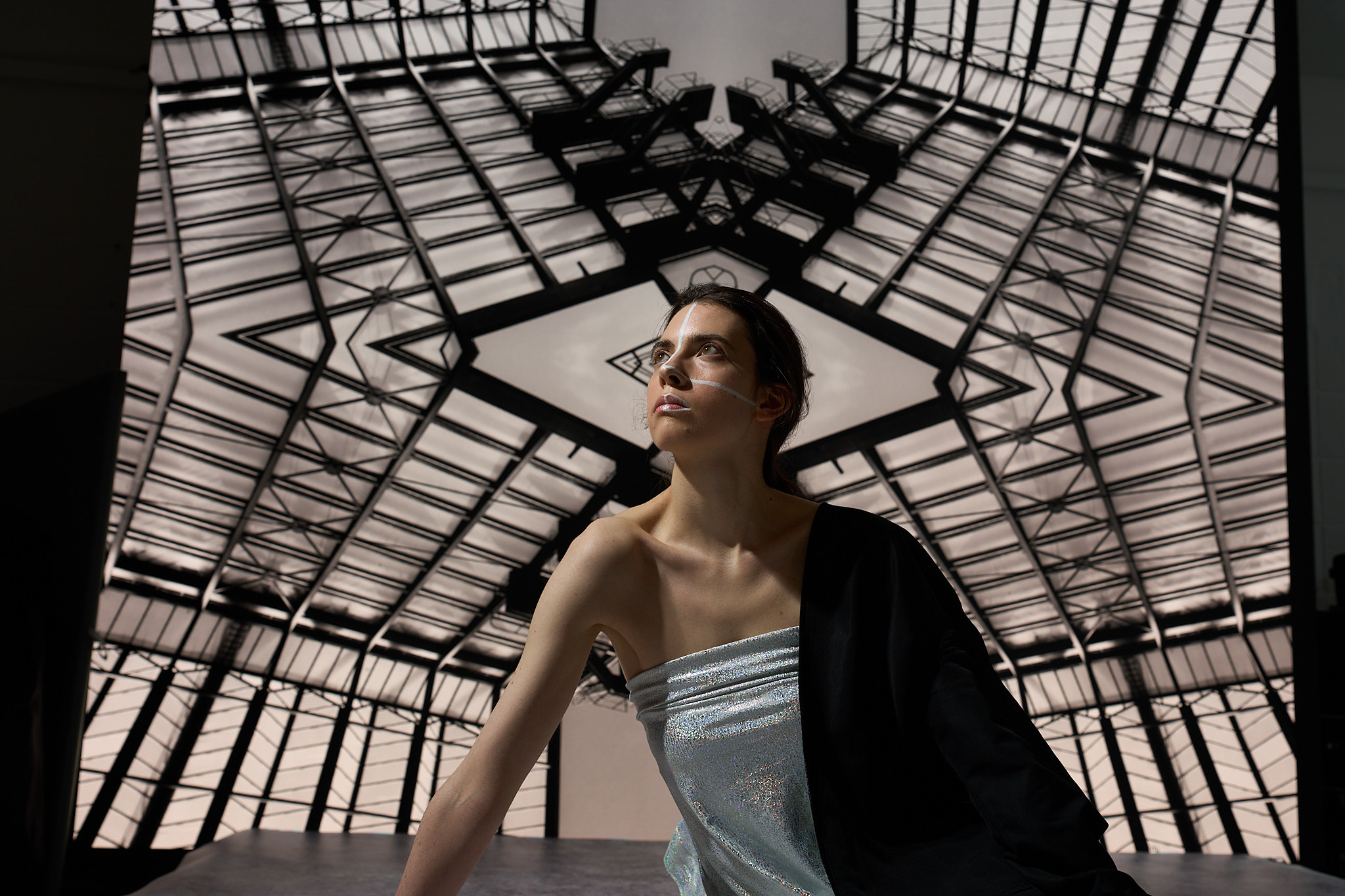
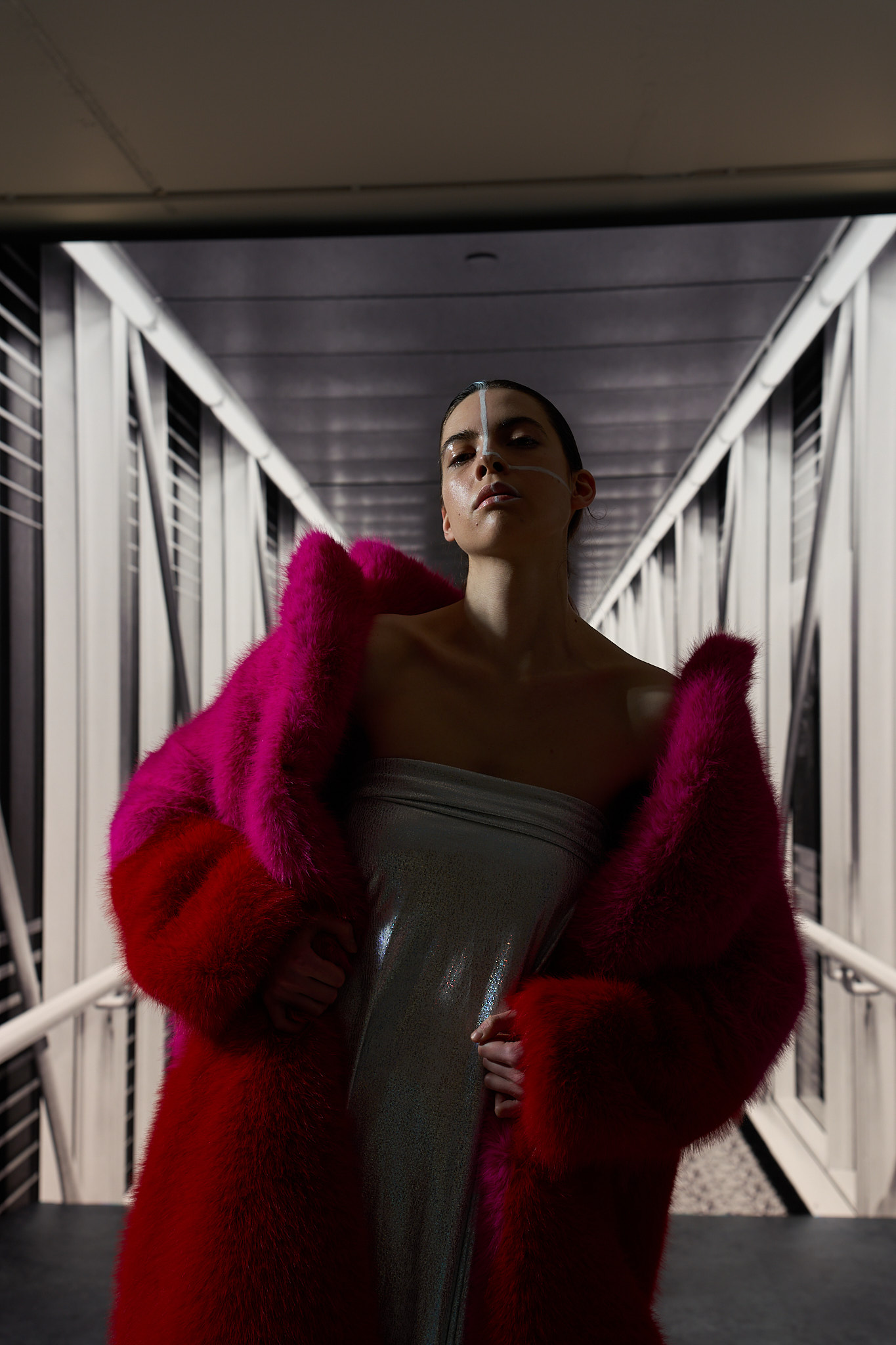
How far a real archival location plate can be pushed graphically with AI: extending ratio and reworking tone, while staying photographically coherent enough to carry full editorial fashion styling.
Plate: artist-owned archival location images, referencing Cuba, Russia and France in one variant, Cuba, Russia and Melbourne in the other. AI used to extend the ratio to 16:9; one variant reworks the model's composition, the other adds characters to the narrative. A vintage camera and a red rotary phone carry the "signal" motif through a curiosities-shop set and a striped-wallpaper retro apartment.
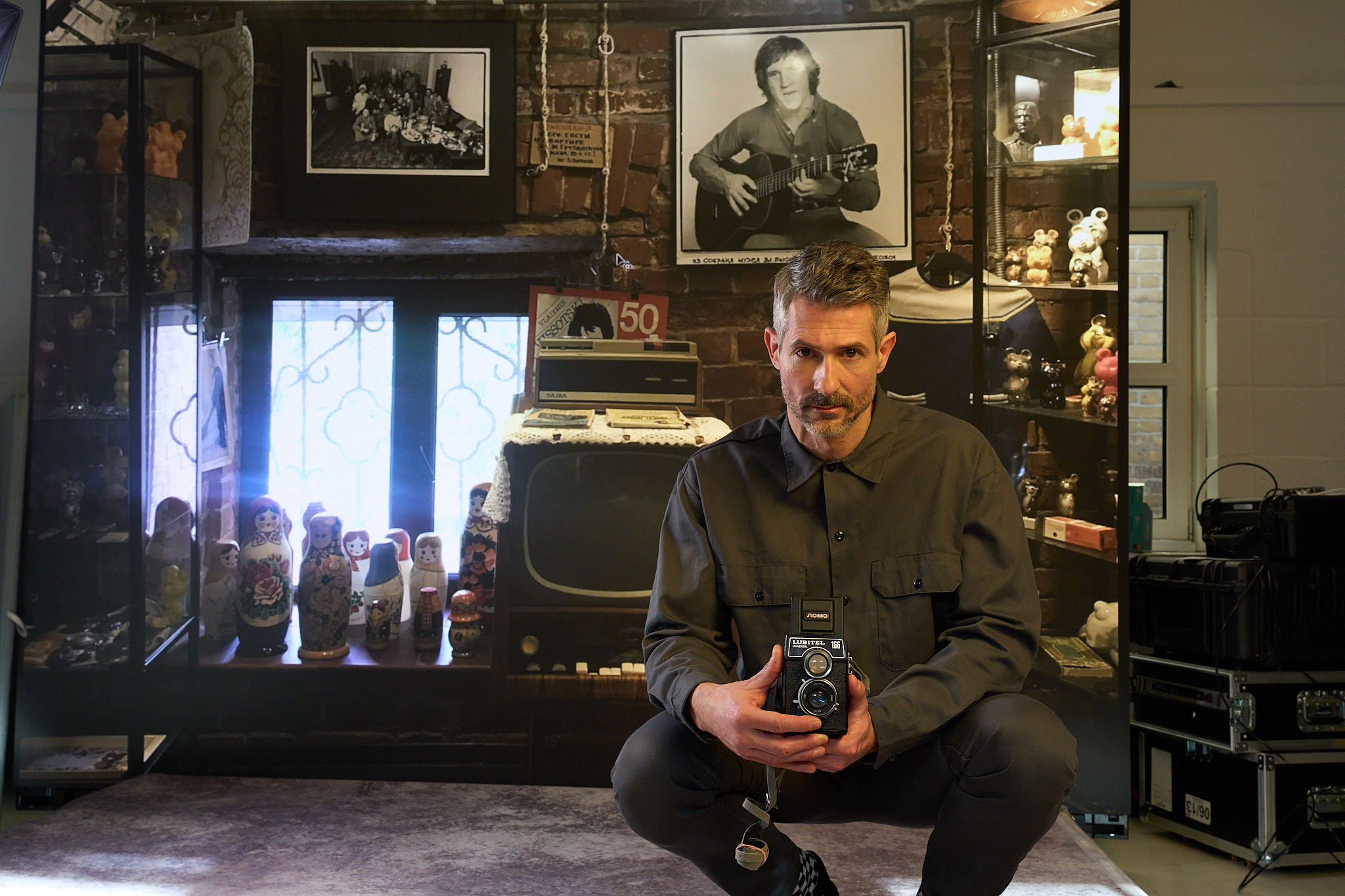
Plate: artist-owned archival location images reimagined with AI, referencing Buenos Aires and London: backgrounds built as a composite of multiple archive images rather than a single extended plate. The most overtly generated set of the day: flattened colour, repeating structural motifs, and kaleidoscopic symmetry that doesn't read as a single photograph.
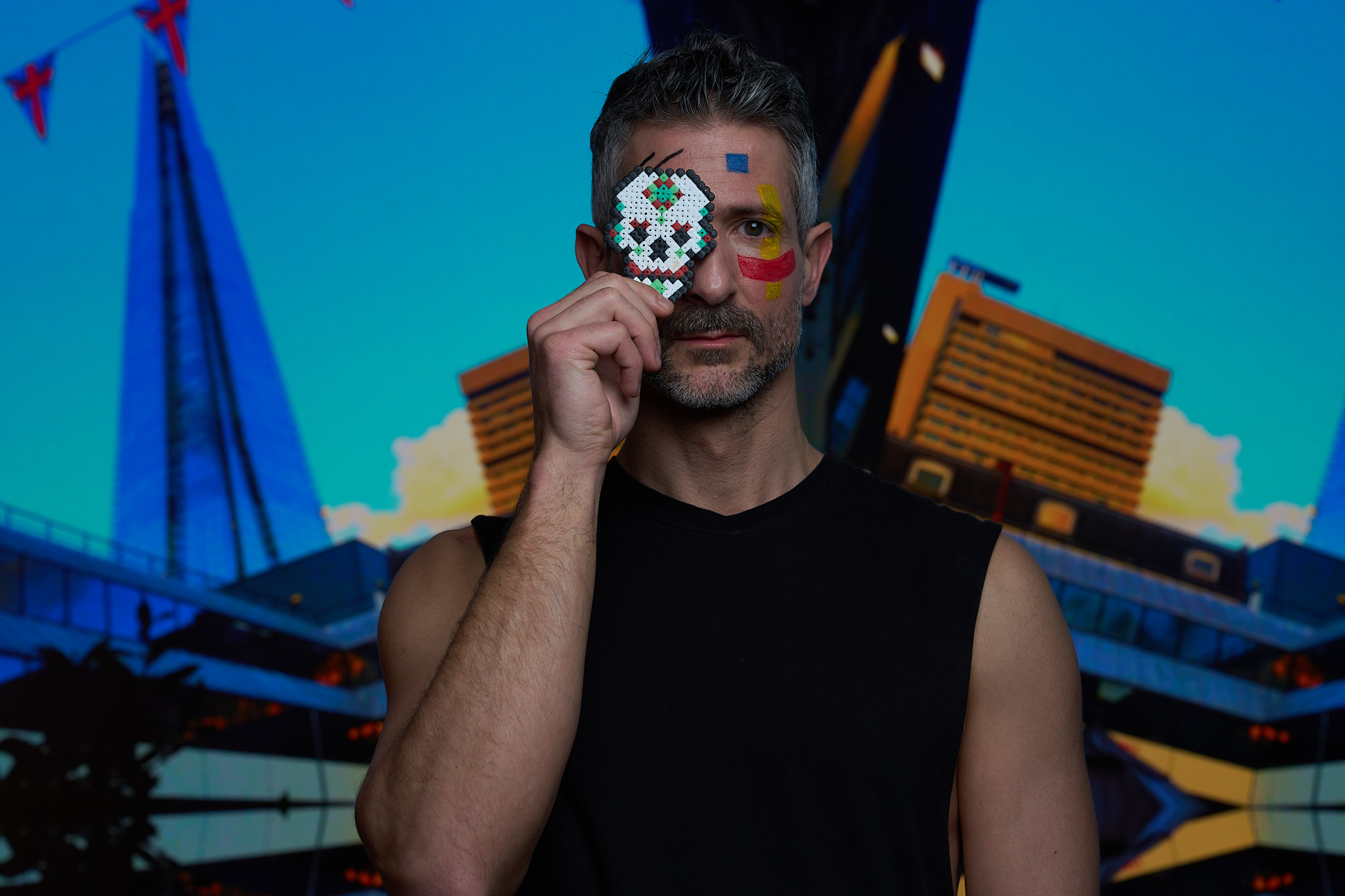
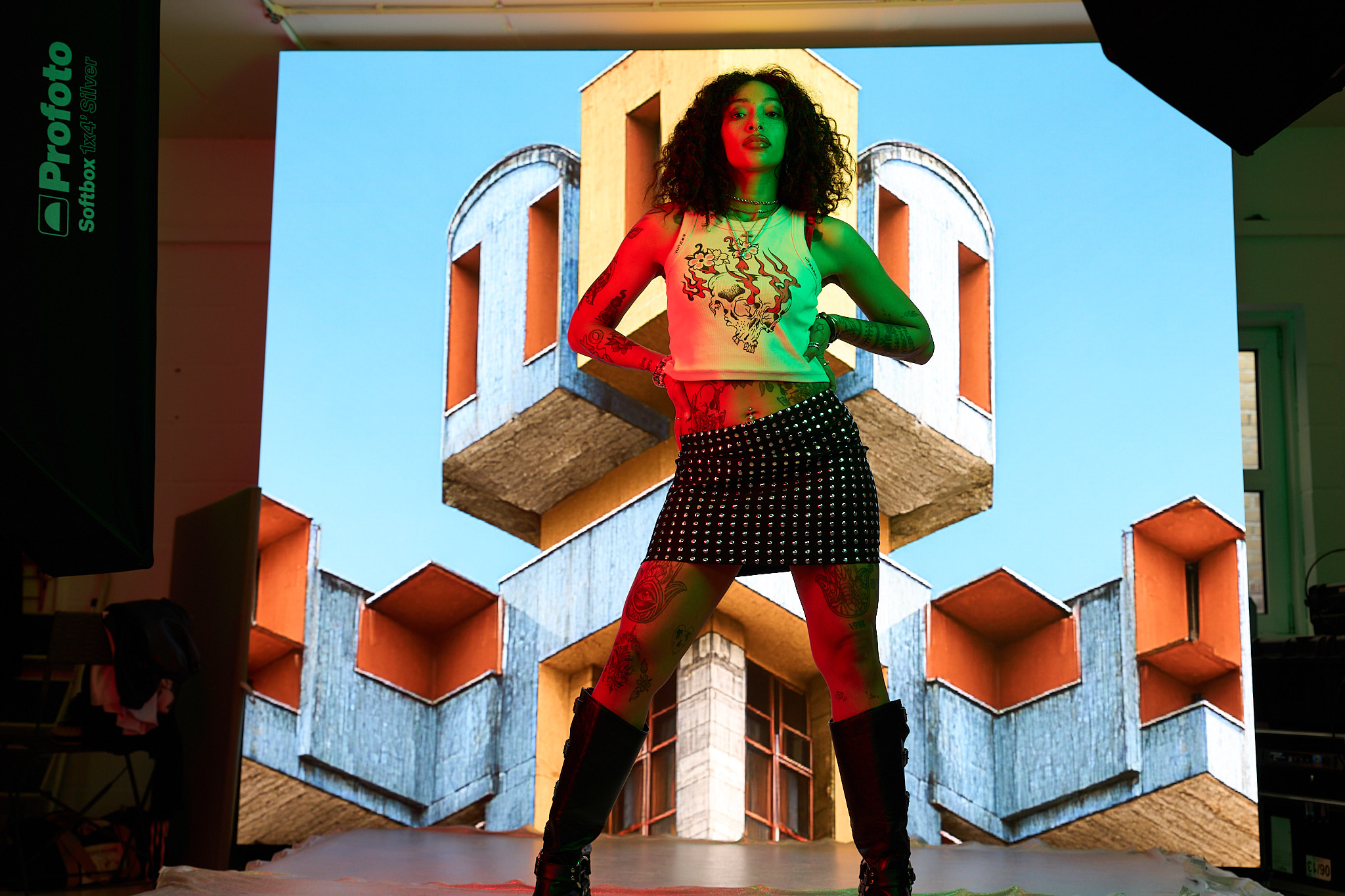
Compositing multiple archival images into one new AI-built environment, rather than using AI to extend or lightly modify a single real plate; the clearest example in this set of where "hybrid" tips fully into "generated."
Plate: artist-owned archival images, Hotel Belvédère, France. AI used to extend the ratio to 16:9 and add costumes to the models. A hotel-room and boudoir world carrying both leads through a costume change, from a neon-lit night scene into an ornate green sitting room.
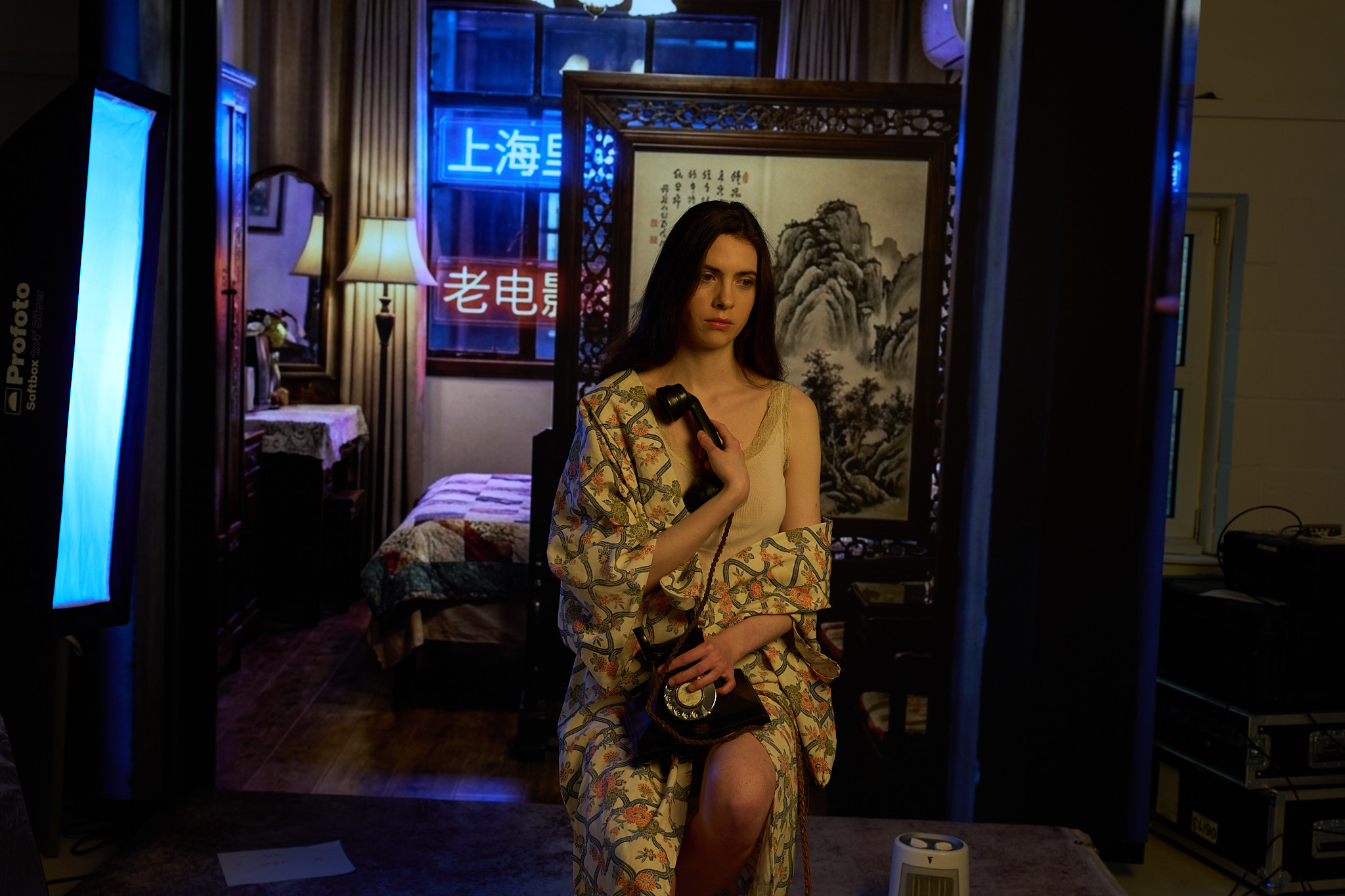

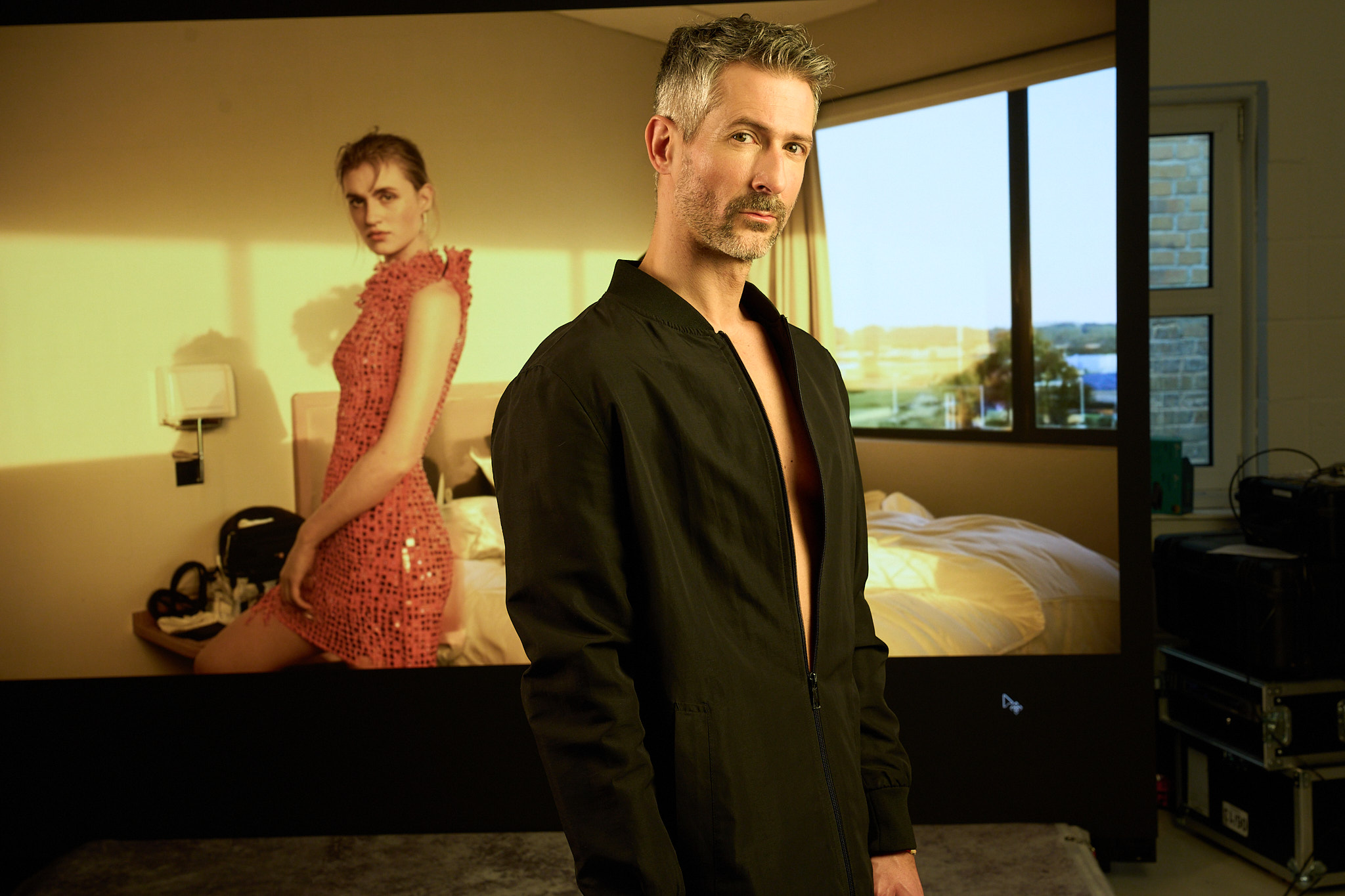
Figures from the shoot, assessed under the Cost pillar of the 5Cs.
The core methodology, applied here to a single day testing IRL, AI and hybrid plates side by side.
22 looks in one day using archive and AI plates, removing travel, location access and set builds. Digital workflows shift cost from production into pre-production and on-set control.
Production shifts from physical build to digital controlReal-time plate editing enabled rapid iteration. IRL plates with clear light direction translated best; window plates and mixed-light interiors needed more intervention to match colour temperature.
Simple lighting translates best, complexity requires controlLive playback moved decisions into the shoot rather than post. Real-time changes brought more voices into the process, requiring clearer roles and decision boundaries.
Speed increases, structure becomes criticalArchive plates give a clear ownership model; AI introduces blurred boundaries between captured and generated content, requiring clear classification for commercial use.
Provenance must be defined, not assumedInternational locations replaced with digital plates, reusing archive assets. AI's data-centre processing is a genuine trade-off against reduced physical production.
Physical impact reduces, digital impact needs definingThis shoot demonstrates how virtual production can increase creative output while reducing reliance on physical production. The key variable is not the technology itself, but how plates are sourced, controlled and combined across IRL, AI and hybrid workflows.